Tianhe Zhang
1. Congratulations on winning in the London Photography Awards! Can you share a little about yourself, what inspired you to pursue photography, and how has your journey evolved since your first shot?
Thank you so much. I am a multi-disciplinary photographer currently based in Beijing, China, with a background in product design. I grew up near the suburban mountains on the edge of the city, and that environment shaped my sensitivity towards nature, quiet spaces, and the subtle details of both domestic and outdoor life.
My background in design has also strongly influenced the way I approach photography. I am naturally drawn to geometric structures, restrained compositions, and the relationship between order and impermanence. Many of my photographs explore calmness, stillness, and fleeting moments hidden within ordinary environments.
Photography first entered my life during my fine art studies, when I used my phone camera to collect visual references for drawing and painting. However, I only began taking photography seriously in 2024 while living in the UK. By chance, I discovered a vintage Polaroid camera in a charity shop, and that encounter unexpectedly changed the direction of my creative practice.
Since then, analogue photography — especially Polaroid — has become an important part of my artistic language. I am fascinated by the fragility, unpredictability, and material qualities of analogue images, and by their ability to preserve emotions and memories in a way that feels deeply physical and human.
Over time, my journey in photography has gradually evolved from simply documenting what I see into exploring themes of memory, absence, temporality, and the quiet traces people leave behind in spaces and landscapes. Through my work, I hope to create images that feel emotionally lingering — moments that may seem ordinary at first, but continue to resonate after they are seen.
2. Can you share the story or inspiration behind your award-winning piece? How does winning this award make you feel about your journey in photography?
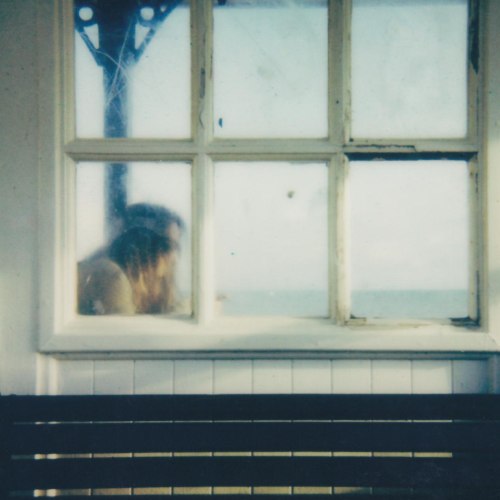
My award-winning photograph was taken in 2024 during my time living in the UK. I was travelling with a friend to Worthing, a seaside town not far from London, and we were walking along the coast when I came across this scene.
Soft sunlight filtered through the pavilion by the sea, gently filling the interior space. On the bench opposite sat a girl quietly knitting while wearing headphones. Her silhouette was partially blurred by the glass between us, while the sea in the background appeared calm and deeply blue. The whole moment felt incredibly peaceful and delicate, almost like a fleeting memory suspended in time. I remember telling myself that if I did not capture it, I would regret it afterwards.
Winning this award feels very meaningful to me because it marks an important milestone in my journey as a self-taught photographer coming from a different academic background. Receiving international recognition has given me a great deal of encouragement and confidence in continuing my photographic practice. It motivates me to keep exploring, observing, and creating more work in the future.
3. How do you decide which photo to submit for a competition?
When choosing a photograph for a competition, I usually rely more on intuition and emotional connection than on strict strategy. For the London Photography Awards, I submitted the image that felt the most meaningful to me personally, and it also happened to be the favourite among my friends.
I also felt that the photograph suited the spirit of the award particularly well because it was taken on the seafront in Worthing during my time living in the UK. The atmosphere of the image — quiet, reflective, and slightly nostalgic — felt closely connected to my experience of British coastal life.
More generally, I tend to choose images that stay in my mind for a long time after taking them. Technical perfection is less important to me than whether a photograph can preserve a certain emotional atmosphere or sense of memory.
4. What first made you pick up a camera?
Photography first entered my life when I was in secondary school studying fine art. At that time, I used my phone camera mainly to record visual ideas and moments that could later become references for paintings and drawings. That experience gradually shaped my observation skills, sense of composition, and attention to small details in everyday life.
During my undergraduate studies, I mostly used cameras only for documenting design projects and coursework. It was not until 2024, while studying and living in the UK, that I seriously began photographing for myself. I found a vintage Polaroid camera in a charity shop, and that unexpectedly became the starting point of my analogue photography practice.
What first attracted me was not technical perfection, but the physical and emotional qualities of the images — the unpredictability, softness, and the way analogue photographs seem to preserve fragments of time and memory. Since then, photography has gradually become one of my main ways of observing and responding to the world around me.
5. What’s your favorite type of photography, and why do you love it?
I enjoy many different forms of photography, but I am especially drawn to analogue photography. I work with both colour and black-and-white film, and Polaroid is probably my favourite medium at the moment. I am also deeply interested in traditional wet plate photography, which is something I hope to explore further in the future.
Compared to portraiture, I am usually more interested in landscapes, still life, and the quiet presence of animals within a scene. What attracts me to analogue photography is its subtle colour palette, grain, and physical texture, as well as the sense of nostalgia and lingering memory that film can carry so naturally.
I am less interested in highly commercial or overly polished digital photography. I prefer images that feel fragile, atmospheric, and emotionally unresolved — photographs that resemble memories rather than perfectly constructed visuals.
6. What’s your go-to camera setup, and why does it work best for your projects? What’s your favorite feature?
Actually, the camera I used to shoot the winning image was a vintage Polaroid 636CL, which is a very simple camera with very limited controls. Apart from the exposure slider and a built-in close-up lens, there is not much to adjust technically.
My setup is usually quite minimal: -2 exposure on bright sunny days, 0 or +1 exposure adjustment on cloudy days, and full exposure with flash indoors.
What I like most about this camera is precisely its simplicity and unpredictability. The vintage lens, the imperfect exposure, and the physical qualities of Polaroid film create a softness and atmosphere that feel emotionally closer to memory than to documentation. Instead of aiming for technical perfection, I am more interested in the fragile and transient feeling the camera can preserve.
7. If someone looked at your work, what’s the one thing you’d want them to feel?
I hope viewers can feel the affection and emotional connection I have towards the landscapes, objects, and moments I photograph. More than simply documenting a scene, I photograph with a sense of care, tenderness, and sometimes even quiet pain — as though I am trying to preserve something precious before it disappears.
Many of the moments I photograph are very fragile and temporary. Through my work, I hope viewers can sense the desire to hold onto those fleeting fragments of time, and to briefly make them feel permanent.
8. What was the most challenging part of capturing your winning shot?
One of the most challenging aspects was composition and framing. Since the Polaroid 636CL is a rangefinder camera, what I see through the viewfinder does not perfectly match the final image. I had to carefully adjust my position and angle in order to recreate the composition I envisioned.
At the same time, I needed to keep the camera level and stable to avoid unwanted motion blur, especially because the camera itself is very simple and offers very limited controls. Because of these limitations, I relied heavily on observation and composition rather than technical adjustments. In a way, the simplicity of the camera forced me to focus more intensely on the atmosphere and spatial balance within the scene.
9. Is there a specific place or subject that inspires you the most?
I would not say that I am inspired by one single specific location or subject. However, I am deeply drawn to the British coastline — especially landscapes that carry a sense of history, wilderness, and quiet poetry. Seaside towns and coastal spaces often feel emotionally layered to me, as though different memories and traces of time coexist within them.
10. Who or what has been your biggest influence in photography?
In terms of artistic influence, I am particularly fascinated by Andrei Tarkovsky’s Polaroid photographs. I am very moved by their softness, stillness, and emotional atmosphere. Even very ordinary scenes in his images seem to contain memory, solitude, and a sense of time slowly passing. That sensibility has influenced the way I approach photography — not only as documentation, but as a way of preserving fragile emotional experiences and fleeting moments.
11. What message would you share to inspire photographers to participate in photography awards, and what advice would you give to help them excel in the competition?
My advice for competitions would be not to focus only on trends or what you think judges want to see. Instead, choose images that feel honest and emotionally meaningful to you. Technical skill is important, but photographs that carry a personal atmosphere or emotional sincerity are often the ones that stay in people’s memories.
12. What’s one piece of advice for someone just starting in photography?
I would encourage photographers to go outside more, explore different places, observe carefully, and keep experimenting. Photography develops through constant practice — trying different approaches, reflecting on the results, and gradually understanding what truly resonates with you.
I also think it is very important to look at a wide range of strong photographic work. I spend a lot of time following photographers whose work I admire, especially through books, exhibitions, and social media. Over time, this helps you discover what kinds of images move you most deeply, what visual language feels closest to your own emotions, and what direction you genuinely want to pursue.
13. What role do editing and post-processing play in your creative workflow?
Editing and post-processing play a relatively minimal role in my workflow. I usually try to preserve the original atmosphere and physical qualities of the photograph as much as possible, especially when working with Polaroid images.
After scanning my photographs, I mainly make small and careful adjustments, such as removing dust, scratches, fibres, or accidental distractions that interrupt the viewing experience. I occasionally clean up unwanted objects that unintentionally entered the frame, but I generally avoid heavy manipulation or dramatic editing.
For me, the imperfections, textures, and unpredictability of analogue photography are an important part of the emotional character of the image. I am more interested in preserving the feeling of a moment than creating something overly polished or artificial through post-processing.
14. How do you see technology, like AI, influencing the future of photography and your own approach?
I have quite complicated feelings about AI and photography. On one hand, coming from an art and design background, I deeply value originality and personal authorship. I am uncomfortable with the way many AI image-generation systems are built upon enormous amounts of existing artworks and photographs, often without the clear consent of the original creators. Because of this, I still believe there is something irreplaceable about human observation, lived experience, and the emotional sensitivity behind an image.
At the same time, I cannot deny that AI technology can also be very useful as a practical tool. It can quickly generate visual references, assist with technical adjustments, and help remove distracting elements from images in ways that save a great deal of time.
For my own practice, however, I still prefer photography that preserves a physical and emotional connection to reality, especially analogue photography. What interests me most is not perfect image generation, but the fragile and unrepeatable feeling of encountering a real moment. I think AI will continue to influence photography in major ways, but perhaps this will also make handmade, imperfect, and deeply personal photographic work feel even more valuable in the future.
15. If you could photograph anything or anyone in the world, what would it be?
If I could photograph anywhere in the world, I would probably choose Wales. During my time living in the UK, I travelled there quite often and became deeply attached to its landscapes and atmosphere.
What attracts me most is the unique combination of rugged wilderness, history, quietness, and melancholy that can be felt there. The coastline, mountains, ruins, changing weather, and small towns all seem to carry a strong sense of memory and poetry. Even ordinary moments in Wales often feel timeless to me.
I think the emotional atmosphere of Wales aligns very closely with the themes I am naturally drawn to in my photography — fragility, stillness, nostalgia, and the relationship between landscape and memory. It is a place I would love to continue exploring and photographing in the future.