Zuhal H. Erbas
1. Congratulations on winning in the London Photography Awards! Can you share a little about yourself, what inspired you to pursue photography, and how has your journey evolved since your first shot?
From childhood onwards, I was always closely connected to art. I was usually drawing illustrations, though at times I would attempt to write poetry, and at others try to play an instrument. Eventually, I realised that the underlying impulse behind all these shifting interests was the desire to give form to the lofty thoughts growing within me and gradually taking hold of my inner world.
Photography became one of the mediums I explored along the way. I found myself planning, through photography, the very same frames I once imagined while creating illustrations, and the result gave me an extraordinary feeling. I could take a fragment from life itself and bend it according to my own perception. It felt almost like magic.
The thing stood there in all its material reality, yet what I saw remained something else entirely despite that rigid truth. I believe I fell so deeply in love with photography because it reveals the relativity of reality itself.
I later began studying Photography at Mimar Sinan Fine Arts University and attempted to elevate my practice through the technical and aesthetic knowledge I acquired there. Although I worked professionally as a photographer for a brief period, I ultimately wanted photography to remain an authentic form of self-expression in my life, and therefore chose to change professions rather swiftly. Since that decision, photography has remained a deeply personal, amateur pursuit.
2. Can you share the story or inspiration behind your award-winning piece? How does winning this award make you feel about your journey in photography?
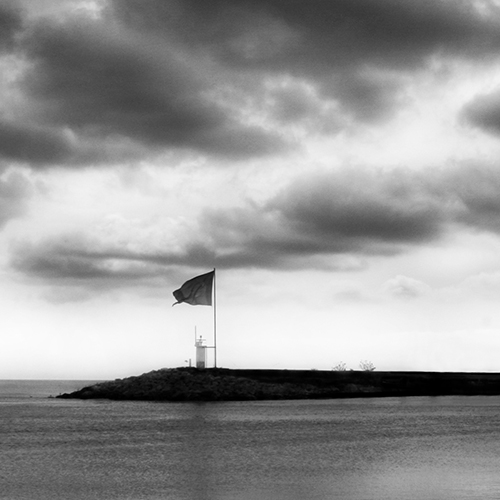
Breakwaters have always created within me a strange tension I could never fully explain. After watching La Jetée by Chris Marker, I felt I finally understood why. That line stretching across the water establishes a boundary between here and there, between myself and the other. It is a line that implies movement whilst simultaneously restricting it.
In both a physical and psychological sense, it becomes a metaphor for the limits of the human condition: a man-made barrier that appears traversable, yet quietly denies the possibility. In that sense, it reflects a moment of confrontation, an encounter with reality itself, perhaps even what mystics might describe as the dark night of the soul.
Receiving this award has made me genuinely happy, particularly because it signifies that the work has resonated with others. I am grateful to the jury members for their recognition. I also believe such acknowledgements allow artists to share their work with wider audiences and perhaps mark the beginning of something further ahead.
3. How do you decide which photo to submit for a competition?
Unless a competition imposes a specific theme, I prefer determining the subject matter myself. I never produce work by calculating whether it may win an award or not. Instead, I leave it entirely to the perception of the viewer. What matters to me is whether they are able to perceive the spirit moving within the photograph.
4. What first made you pick up a camera?
Photography entered my life when my father gifted me a Canon EOS 500 analogue camera at the age of fifteen.
5. What’s your favorite type of photography, and why do you love it?
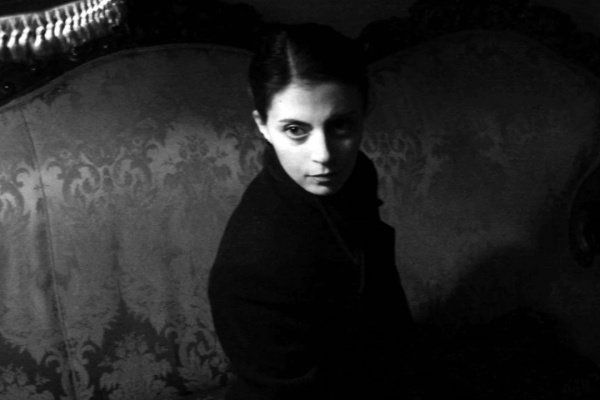
I find myself especially drawn towards conceptual and experimental photography. I see such works almost as sealed envelopes containing hidden messages for those capable of perceiving similar things. Messages written through familiar symbols, yet decipherable only by those who know how to read them. Perhaps it is a way of revealing one’s inner world only to those one truly wishes to reveal it to.
6. What’s your go-to camera setup, and why does it work best for your projects? What’s your favorite feature?
Although I still prefer working with analogue cameras, access to materials has gradually become more difficult and expensive, and therefore I also work digitally. I use separate groups of lenses for my analogue and digital systems. I still make use of my darkroom from time to time as well. It feels almost like a small sanctuary to me. I also frequently prefer using a tripod, as I enjoy working in a calm and contemplative manner.
7. If someone looked at your work, what’s the one thing you’d want them to feel?
I hope viewers are able to receive the hidden message I mentioned earlier. In truth, I do not believe I conceal anything at all; everything is already there in plain sight, though not everyone is able to perceive it. Still, I wish they could.
8. What was the most challenging part of capturing your winning shot?
To capture the award-winning series from the angle I desired, I had leaned rather far out towards the sea. I eventually lost my balance and fell backwards into the cold waters of the Bosphorus. Fortunately, I managed to keep the camera raised above the water in my hands. One of the photographs was a frame I captured just before falling.
9. Is there a specific place or subject that inspires you the most?
Life, in its own flow, contains countless mesmerising fragments. I simply raise my head and observe, allowing the emotional resonance of each fragment to slowly seep into me.
10. Who or what has been your biggest influence in photography?
Photographers such as Imogen Cunningham, Bill Brandt, Ralph Eugene Meatyard, Francesca Woodman, and Shirin Neshat influence me profoundly, particularly in the way they transform photographic practice into an existential language.
11. What message would you share to inspire photographers to participate in photography awards, and what advice would you give to help them excel in the competition?
Award programmes are highly valuable structures supporting artists. They both increase visibility and motivate artists through institutional recognition. However, I do not believe they should become objects of desire in themselves. Rather, they should be regarded merely as one possible outcome of the creative process, never as the primary driving force behind artistic production.
12. What’s one piece of advice for someone just starting in photography?
My advice would be this: do not listen to me or to anyone else, listen instead to the voice of your own soul. Deep within every human being exists a truth capable of illuminating their path. It is that truth which carries passion into the world, and the world towards beauty.
13. What role do editing and post-processing play in your creative workflow?
I believe any form of post-production can be used, provided the spirit of the work remains intact. Although I generally prefer achieving the intended result during the shooting process itself, there are occasions where certain refinements become necessary afterwards. At times, I also conceive works from the outset as a combination of both shooting and post-production processes.
14. How do you see technology, like AI, influencing the future of photography and your own approach?
Since I regard all forms of art, including photography, as modes of human self-expression, I also believe artificial intelligence may be incorporated into artistic practice. Nevertheless, particularly in the visual arts, there currently exists a vast legal vacuum surrounding the use of AI, especially concerning copyright law, and serious regulations are urgently required.
Unfortunately, throughout history, technological progress has almost always advanced faster than ethical or legal frameworks, sometimes in an uncontrollably audacious manner. Yet it is important to remember that every major artistic innovation throughout history has simultaneously encountered rejection and support within its own era.
The invention of photography itself once caused outrage within artistic circles and was not initially accepted as a legitimate artistic medium. Many feared painting would lose its value, yet photography ultimately developed an entirely separate language and field of expression. I believe artificial intelligence will -lawfully- evolve into a tool that assists artists rather than replacing them.
15. If you could photograph anything or anyone in the world, what would it be?
Such possibilities always exist, and artists should remain free to explore them. Personally, I do not perceive rigid limitations in this regard. As one continues to live, one’s perception of life, objects, and phenomena inevitably changes. Within that natural transformation, I feel capable of photographing anything I genuinely wish to photograph, provided the encounter itself is sincere.