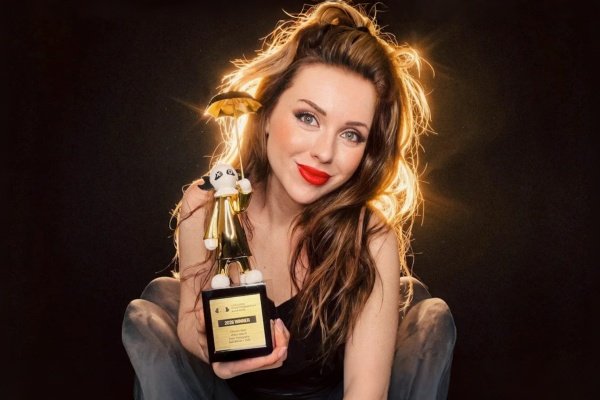
Venla Shalin
1. Congratulations on winning in the London Photography Awards! Can you share a little about yourself, what inspired you to pursue photography, and how has your journey evolved since your first shot?
Thank you so much! It is an absolute honour to be recognised. I am a Finnish photographer specialising in event and music photography. My journey began out of a deep love for live music, which has been my happy place and ultimate escape since my teenage years. What started as a personal passion project quickly evolved into a dedicated career path.
Since that first shot, this passion has taken me all over the world. It has allowed me to work alongside the exact same artists who inspired me on day one, and my work is regularly published through international media outlets and commissioned by festivals, artists, and brands globally.
Collaborating with incredible industry professionals, festivals, and artists is a profound experience, and receiving this international recognition is a wonderful milestone on that path.
2. Can you share the story or inspiration behind your award-winning piece? How does winning this award make you feel about your journey in photography?
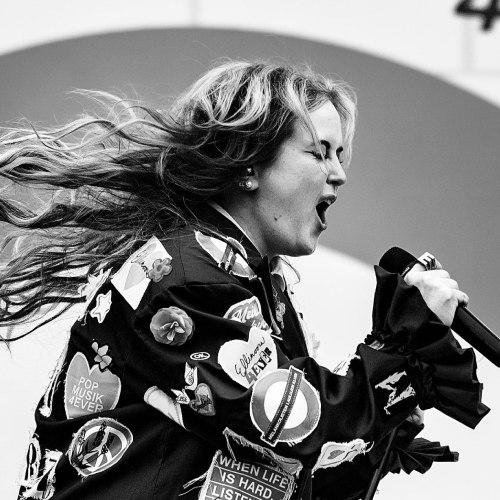
The winning piece, 'Ellinoora 4ever,' was captured during Ellinoora’s set at the Ruisrock festival last summer. I have always admired her artistry; from her stage setup to her wardrobe, there is always something visually interesting to capture. What inspired me about this specific frame was its powerful duality. You see the explosive outward energy of her running on stage with her hair flowing, contrasted with the undeniable inner calm in her closed eyes. It captures a beautiful moment of pure trust: trust in her craft, and trust that the show will be electric, rain or shine.
Winning the London Photography Awards is incredibly meaningful because it feels like recognition not just of a single image, but of decades spent chasing fleeting moments and learning how to translate them into something lasting. It reinforces my belief that the images which resonate most are often the ones created from genuine connection and instinct.
3. How do you decide which photo to submit for a competition?
I look for images that reveal something beyond the performance itself, a fleeting expression, an unexpected interaction, or a moment that would be impossible to recreate. The strongest competition images are often the ones that stop people in their tracks and make them look twice. I’m always searching for a frame that tells a complete story in a single glance.
4. What first made you pick up a camera?
Curiosity and a desire to hold onto moments that are, by nature, entirely temporary. When I was a teenager, I had this strong sense that if you photograph a moment and the image looks exactly like it felt, that moment becomes immortal. I found great comfort in the idea that a photograph could immediately transport you back to a specific feeling or moment, no matter how much time had passed and where you were. I wanted to find a way to bottle that live energy and share those unforgettable nights with people who couldn't be in the room and with those who were.
5. What’s your favorite type of photography, and why do you love it?
Live music and large-scale event photography, without question. There are no retakes, no control, and no second chances. You are working in a highly volatile environment where the lighting shifts in a millisecond and the artist is completely surrendered to their performance. I love the high-stakes thrill of that challenge. It demands that you be entirely present, adaptable, and deeply intuitive.
6. What’s your go-to camera setup, and why does it work best for your projects? What’s your favorite feature?
My go-to setup is two camera bodies paired with 24-70mm f/2.8 and 70-200mm f/2.8 lenses. It gives me the flexibility to adapt instantly to changing light, crowded photo pits, and fast-moving performers. My favourite feature is reliability. In live music photography, there is no opportunity to ask an artist to repeat a moment, so fast autofocus performance and low-light capability are invaluable. At the end of the day, the most important tool is experience. The ability to stay calm and anticipate moments matters just as much as the equipment itself.
7. If someone looked at your work, what’s the one thing you’d want them to feel?
Immersed. I want them to feel less like they are looking at a frame behind glass and more as if they’ve just been handed a front-row pass. I want them to feel the heavy bass in their chest, the heat of the stage lights, the sweat, and the presence of the artist. Live music is a powerful human connector; if my image makes a viewer feel what it was like to be there, then I’ve done my job.
8. What was the most challenging part of capturing your winning shot?
I only had access to the first three songs of the set, which meant there was very little time to create something distinctive. Combined with changing weather conditions and a crowded photo pit, every decision had to be made quickly. The challenge was anticipating the exact moment when everything aligned.
9. Is there a specific place or subject that inspires you the most?
I am endlessly inspired by artists who treat the stage as an open canvas, those who pour their entire soul into their performance, their styling, set design, and their connection with the crowd. I love the challenge of capturing how an artist interacts with their audience.
Much of that inspiration also comes from well-designed stage lighting: when a show has brilliant, dynamic lights, it completely transforms the space. It gives me the perfect environment to play with shadows and highlights and capture the true scale and mood of the performance.
10. Who or what has been your biggest influence in photography?
I've always been influenced by performance itself. Great performers understand timing, emotion, movement, and connection, and those same elements are at the core of strong photography. It was actually my mom and my friends from the very early days, when I was just 13 years old, who encouraged me to keep shooting and keep improving.
Looking back, that support played a huge role in shaping the photographer I became.
11. What message would you share to inspire photographers to participate in photography awards, and what advice would you give to help them excel in the competition?
Put your work out there and trust it's worth it; you have nothing to lose and everything to gain. When choosing your submissions, don’t try to guess what the judges want to see, and never compare your path to someone else's. Submit the work that makes you feel something. Authenticity always stands out.
12. What’s one piece of advice for someone just starting in photography?
The most expensive camera cannot teach you how to read the rhythm of a room. Master the basics on whatever gear you have and trust your instincts. Most importantly, protect your creative focus. There will always be external noise, trends, or critics trying to dictate your direction. Learn to filter out the distractions early and trust your own eye. Never compare your day one to someone else's day one hundred; only compare your current work to your own past work. Your eye and your resilience are your most valuable assets.
13. What role do editing and post-processing play in your creative workflow?
For news agencies and editorial work, it is all about the immediate turnaround. I keep editing to an absolute minimum and prioritise speed, frequently delivering files while the artist is still live on stage.
When working directly with an artist or creating a final event gallery, the creative freedom changes. That is where post-processing becomes a storytelling tool. I’ve always believed that photography is ultimately an interpretation. It is not just about documenting a literal reality, but about showing people how you experienced it.
Concert photography often involves difficult lighting, fast movement, and constantly changing conditions, so editing allows me to refine and strengthen the story I want the image to tell.
14. How do you see technology, like AI, influencing the future of photography and your own approach?
AI is a powerful tool that is opening up a whole new world of creative possibilities. While I believe it’s vital that technology respects artistic copyright, I’m fascinated by how creators can use AI to expand and enhance their own work in new ways. At the same time, I believe photography will always be rooted in something uniquely human: being present for a real moment and recognising its significance. Human perspective, timing, and storytelling will always remain at the heart of great photography.
15. If you could photograph anything or anyone in the world, what would it be?
My ultimate dream is to be embedded as the official tour photographer on a massive, highly conceptual world tour. I want to document the entire raw journey from the quiet, intimate backstage preparations to the explosive, stadium-scale performances and translate that entire journey into a definitive photography book and interactive experience. The name of the book is already waiting; it just needs the story to catch up.