Andre Magarao
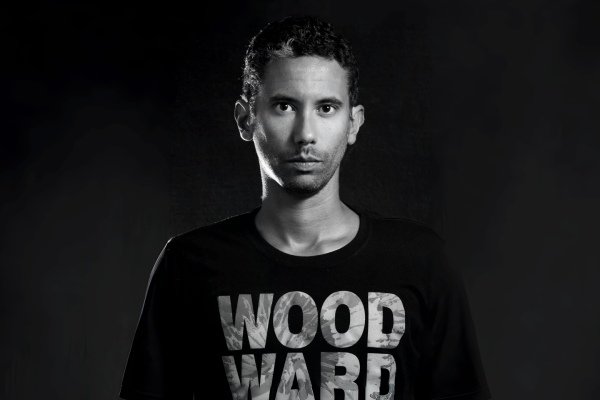
1. Congratulations on winning in the London Photography Awards! Can you share a little about yourself, what inspired you to pursue photography, and how has your journey evolved since your first shot?
I began photographing with my father. Back in the film days, he owned a Pentax SLR, and that was where my curiosity for photography first took shape. I initially focused on landscapes, often photographed during early-morning bike rides. Cycling taught me discipline, the value of waking up early, and an appreciation for beautiful locations and soft morning light—lessons that continue to influence my work today.
As someone who has always been deeply connected to sports, it felt natural to start photographing my friends practising the disciplines I loved. Shooting on film, without the safety net of Photoshop, I quickly learned how critical light and timing were—especially during golden hour.
When I transitioned into photographing skateboarding, I also learned a valuable reality: skateboarders are rarely willing to wake up at 5 a.m. for perfect natural light. That challenge sparked my long-standing interest in artificial lighting, which has since become a defining element of my visual style.
I’ve now been working as a professional photographer for over a decade, and throughout these years, my lens has taken me to some of the most dynamic and inspiring corners of the action sports world. Specialising in high-impact imagery, I focus on capturing athletes in their most powerful, fluid, and defining moments—on land, in the water, and in the air.
2. Can you share the story or inspiration behind your award-winning piece? How does winning this award make you feel about your journey in photography?
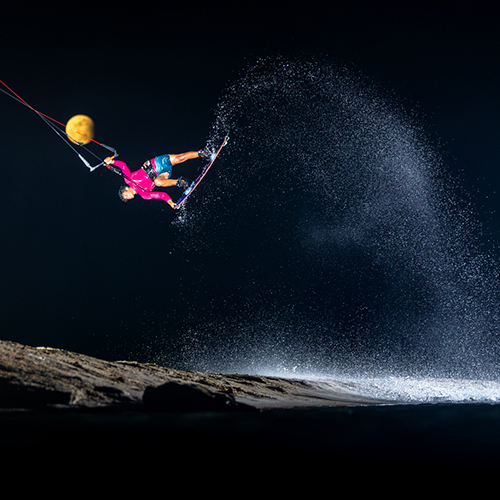
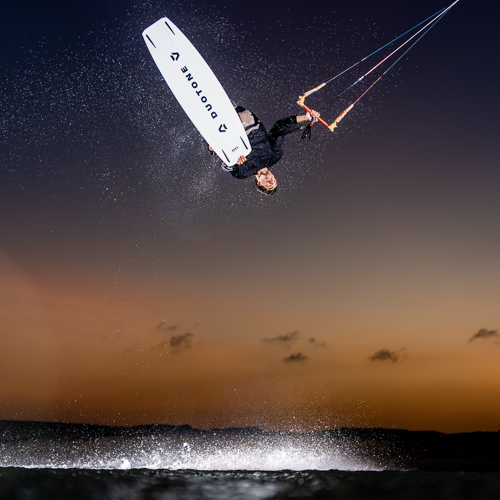
One of the things that inspired this project was the idea of showing kiteboarding in a way people had never really seen before. Most kite photography happens during the day, with beautiful natural light, but I became fascinated by the challenge of creating images at night using flashes in the ocean and around moving athletes. It was technically very difficult, but that challenge was also what made it exciting for me.
These images were created over many sessions with a lot of experimentation, teamwork, and problem-solving. Working in the dark, dealing with wind, water, timing, and athlete positioning pushed me creatively and technically as a photographer. I wanted the final images to feel cinematic and dramatic while still capturing the energy and freedom that make kiteboarding so special.
Winning this award means a lot to me because it feels like recognition not only for a single image but for years of dedication to developing my own visual style and constantly trying to push my work further.
Photography has taken me to incredible places and introduced me to amazing people, and moments like this remind me why I fell in love with it in the first place. It also motivates me to keep experimenting, taking risks, and searching for new ways to tell stories through images.
3. How do you decide which photo to submit for a competition?
Choosing which image to submit is always difficult, especially because photography is so personal. But when you work with nature and action sports, there are certain days that simply feel different. Every once in a while, everything aligns — the wind, the light, the weather, the athlete’s performance, and the energy of the moment.
With these night kiteboarding images, there was one particular session where it felt like nature became part of the creative process itself. We were already dealing with the complexity of shooting kiteboarding at night with flashes, which requires a huge amount of coordination and experimentation, but that day, the conditions created something truly special and unexpected.
The atmosphere, the movement of the water, and the way the light interacted with the environment all came together in a way that could never be fully planned.
4. What first made you pick up a camera?
What first made me pick up a camera was actually my love for being outdoors and riding bikes. I started taking photos because I wanted to show my friends the unique places I was discovering on my rides and hopefully inspire them to come along and experience those places too.
Over time, photography became much more than that. Many of my friends were incredibly talented athletes, and I became fascinated by the idea of documenting the amazing things they were doing in sports. I wanted to capture not only the action itself but also the dedication, creativity, and emotion behind those moments.
That curiosity slowly evolved into a career and a passion for storytelling through images. Even today, a big part of what drives me is still the same feeling I had in the beginning — sharing experiences and showing people moments and places they may never have seen otherwise.
5. What’s your favorite type of photography, and why do you love it?
My favourite type of photography is definitely sports photography. I love the combination of emotion, movement, unpredictability, and storytelling that comes with it. Every session is different, and there’s something very rewarding about trying to capture a fraction of a second that represents so much work, talent, and energy from the athlete.
I’m also especially drawn to working with artificial lighting. I love the creative and technical challenge of mixing flashes with natural light and using that combination to shape the mood and atmosphere of an image.
In action sports, conditions are constantly changing, so balancing artificial and natural light often requires a lot of experimentation and quick problem-solving, which is something I really enjoy. For me, that blend of sport, creativity, and technical challenge is what keeps photography exciting.
6. What’s your go-to camera setup, and why does it work best for your projects? What’s your favorite feature?
We’ve never been too attached to a specific camera setup because, for me, the most important part of photography is the story and the feeling behind the image. Different projects often require different tools, and I enjoy adapting to whatever helps bring the idea to life in the best possible way.
What matters most to me is being able to show how beautiful, creative, and fun these sports really are. Whether I’m shooting in difficult weather, working at night with flashes, or documenting athletes in remote locations, my focus is always on capturing emotion, movement, and atmosphere rather than the equipment itself.
I think it’s easy to get caught up in gear, but in the end, the camera is just a tool. The real challenge — and the real excitement — comes from creating images that make people feel connected to the moment.
7. If someone looked at your work, what’s the one thing you’d want them to feel?
I would want people to feel a sense of wonder and curiosity. Many of the sports and locations I photograph are difficult to access or experience firsthand, so I hope my images can transport people into those moments and let them feel a small part of the energy, beauty, and emotion that was there.
I also hope people feel the connection between the athletes and nature. Whether it’s wind, waves, mountains, or light, so much of these sports depends on working with the environment rather than controlling it. Some of the most special moments happen when everything comes together in an unexpected way, and I try to capture that feeling in my work.
More than anything, I want the images to make people feel inspired — to go outside, explore, create, and experience the world a little differently.
8. What was the most challenging part of capturing your winning shot?
One of the biggest challenges was that this particular location is actually not very photography-friendly. The wind there is incredible for kiteboarding, which is why riders love it, but visually, the conditions can often be quite difficult. The light is usually hazy and flat, and the atmosphere doesn’t naturally create the kind of dramatic images photographers hope for.
That became part of the creative challenge for me — trying to make the most of an environment that normally would not be considered ideal for photography. Using flashes at night allowed me to shape the scene in a completely different way and create depth, mood, and separation that the natural conditions alone were not giving us.
I think that’s something I enjoy a lot about photography in action sports. Sometimes the most rewarding images come from difficult environments where you have to adapt, experiment, and find creative solutions rather than relying on perfect conditions.
9. Is there a specific place or subject that inspires you the most?
I’m inspired most by images that are not only aesthetically beautiful but also feel intentional and meaningful. I love photographs where you can sense that every choice the photographer made had a purpose — the light, the composition, the timing, the perspective, or even the location.
When I look at an image and can understand why the photographer approached it a certain way, it becomes much more inspiring to me. It feels less like a random moment and more like a personal interpretation of a scene or story. I think that balance between beauty and intention is what I’m always searching for in my own work as well.
Because of that, I’m often drawn to projects where there is a strong connection between the athlete, the environment, and the visual approach. I want the images to feel artistic, but also honest and connected to the experience that was actually happening there.
10. Who or what has been your biggest influence in photography?
I don’t think I have one single biggest influence in photography. What inspires me most are photographers who have developed such a strong visual identity that you can recognise their work immediately, even without seeing their name attached to it.
I really admire photographers who create images with a clear point of view and a consistent style. It doesn’t necessarily mean shooting the same subject or using the same technique every time, but rather having a way of seeing and interpreting the world that feels personal and recognisable.
That’s something I’ve always tried to pursue in my own work as well — creating images that feel intentional and unique while still staying connected to the emotion and reality of the moment.
11. What message would you share to inspire photographers to participate in photography awards, and what advice would you give to help them excel in the competition?
My main advice would be: don’t shoot for the competition.
The strongest images always come from a real intention — something you wanted to express, capture, or communicate in that moment. If you start thinking too much about what might “win” or what judges want to see, it’s very easy to lose the authenticity that makes an image powerful in the first place.
Instead, focus on making work that feels true to you and meaningful to the people and environment it comes from. In my case, that often means the athletes I’m working with, the conditions we’re in, and the story we’re trying to tell together. If an image resonates with that core group first, it usually carries much more honesty and strength.
When that happens, the recognition becomes a byproduct rather than the goal. And I think that’s what ultimately makes an image stand out in any competition — not because it was made to win, but because it was made with purpose and authenticity.
12. What’s one piece of advice for someone just starting in photography?
Have fun with your friends!
13. What role do editing and post-processing play in your creative workflow?
Editing and post-processing are an important part of my workflow, but I always try to do as much as possible in-camera first. Modern cameras are incredibly powerful, and because of that it can be easy to over-process an image and end up in a place where it starts to feel artificial or disconnected from what actually happened.
For me, the goal is to keep a sense of truth in the photograph. I want people to understand that what they are looking at is still a photo — a real moment — not something that has been heavily constructed afterwards.
At the same time, I see post-processing as a way to refine and support the original intention of the image. If it helps enhance the mood or guide the viewer closer to how the moment felt, then it has a purpose. I’m also inspired by the look of certain older film stocks, and I sometimes use editing to subtly reference that aesthetic when it fits the story.
Ultimately, it’s about balance — respecting the authenticity of the capture while using post-processing thoughtfully to bring the image closer to the feeling I experienced in the moment.
14. How do you see technology, like AI, influencing the future of photography and your own approach?
I think AI will inevitably have a big impact on photography, and it will likely take over a lot of the more commercial and repetitive aspects of the industry. That shift is already starting to happen, and it will probably continue accelerating in the coming years.
At the same time, I hope that in sports photography we continue to value what makes it fundamentally different: real human performance, real moments, and real physical effort. There is something powerful about knowing that what you are seeing actually happened in front of a camera, in real time, with all the unpredictability that comes with it.
15. If you could photograph anything or anyone in the world, what would it be?
There are many places I would love to photograph, but Iceland and New Zealand are definitely high on that list. I’m drawn to landscapes that feel raw, powerful, and a bit otherworldly — places where nature is the main subject, and you’re constantly reacting to changing conditions.
What excites me about those locations is not just the scenery itself, but the atmosphere and unpredictability they bring. I imagine strong winds, dramatic light, and environments that constantly challenge you to adapt as a photographer. That kind of setting feels very aligned with how I like to work, especially in sports and action photography.