Ieva Mizgeraite
1. Congratulations on winning in the London Photography Awards! Can you share a little about yourself, what inspired you to pursue photography, and how has your journey evolved since your first shot?
Photography didn't really start for me in 2025 — it started much earlier, in childhood. My father had a camera, and I remember the way he pointed it at ordinary moments, everyday things, and somehow made them worth keeping. That stayed with me.
For a long time, it was just an instinct in the background. Then it came back as something I needed — a way to slow down, to recharge, when everything else was pulling at me. And from there it just kept growing. It became a way to understand myself, to ask questions I couldn't ask any other way.
What I do now is conceptual. I'm not interested in documenting appearances — I want to photograph what lives underneath. The psychological states, the tensions, the masks people wear. The distance between who we are in public and who we are when no one is watching.
So the journey has been from instinct to intention. And winning at the London Photography Awards in my very first professional year — that was a sign that the direction is right.
2. Can you share the story or inspiration behind your award-winning piece? How does winning this award make you feel about your journey in photography?
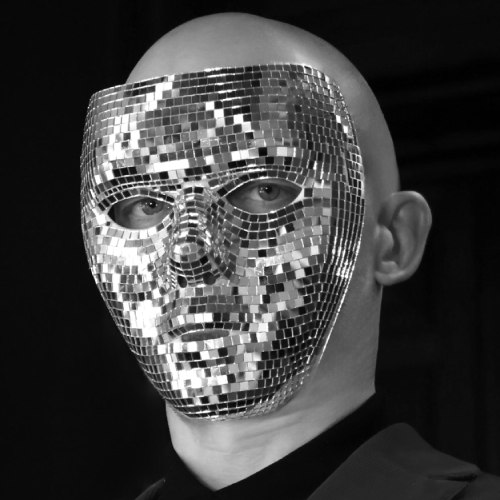
The piece that won — Mirror Face — came from a question I kept asking myself: what do we show the world, and what do we hide? The mirror mask was the answer to that question, made physical. It reflects everything back — you see yourself in it, but you can't see the person wearing it. That felt like the most honest image I could make of how we move through life.
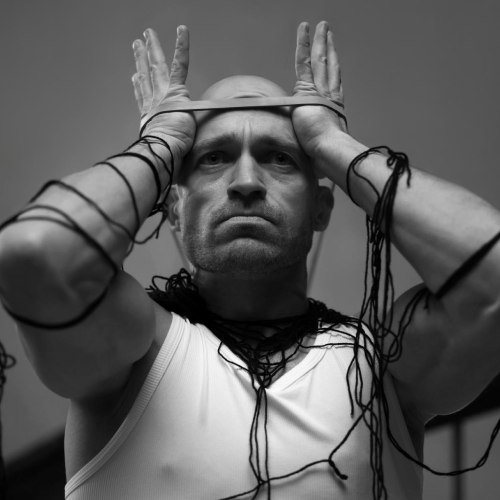
And No Inside came from the same place — that feeling of being bound by something invisible. The strings, the hands pressing down on the head. That's not performance. That's something most people recognise immediately, even if they've never put words to it.
Winning honestly — I'm still taking it in. To be recognised in my first professional year, for work that is so personally rooted, meaning the language I've chosen is working. That people feel what I intended them to feel.
But more than anything, it makes me want to keep going. There is so much more of the inner world I haven't touched yet. Every person carries something beneath the surface that has never been photographed. That thought keeps me completely motivated — I feel like I've only just started.
3. How do you decide which photo to submit for a competition?
It's never just about which image looks the strongest technically. I ask myself — does this image say something that can't be said in words? Does it hold something the viewer needs a moment to understand?
I do submit the same images to several competitions. When I believe in a piece deeply enough, I want to give it every chance to be seen. Different competitions, different judges, different contexts — the same image can land each time differently. I don't see that as a weakness in the strategy. I see it as a commitment to the work.
What changes is the category and sometimes the framing — how I position the image, what I say about it in the statement. That part I think through carefully. Who are the judges, and what is the brief really asking for beneath the surface?
And I always listen to my gut. There's always one image in a series that carries more weight than the others. Not necessarily the most beautiful or the most dramatic — but the one that feels most true. That's usually the one I submit.
With Mirror Face and No Inside, the choice was clear quite quickly. Both images had that quality of stopping people — even people who know nothing about fine art. When someone looks at an image and goes quiet, that's the signal.
4. What first made you pick up a camera?
My father. He had a camera, and watching him use it taught me something without words — that ordinary moments are worth keeping. That instinct was always there. I just didn't pick up the camera myself until I needed it. Until life got loud enough that I had to find a way back to stillness. Photography was that way.
5. What’s your favorite type of photography, and why do you love it?
Conceptual fine art. Without question.
I'm not drawn to capturing what already exists — I'm drawn to making invisible things visible. A psychological state, an inner tension, a truth that has no other form. That's what this kind of work allows.
I love that it starts long before the camera. It starts with a question I can't stop thinking about. By the time the shutter is pressed, the image already exists in some sense. The camera just confirms it.
And black and white — I love what it removes. Without colour, you go straight to the psychological core. Nothing to hide behind.
6. What’s your go-to camera setup, and why does it work best for your projects? What’s your favorite feature?
Canon EOS R6. It's not the most talked-about camera in fine art circles, but it works perfectly for how I shoot.
What I love most is how it handles low light. A lot of my work happens outdoors in natural light — early morning, late afternoon, deep shadow — and the R6 holds detail in darkness in a way that matters for black-and-white work specifically. The shadows stay rich, not muddy.
The autofocus is also remarkable. When you're working with a person in an emotionally charged moment, you don't want to be fighting the camera. The R6 lets me stay present in the conversation, in the connection, and trust that the technical side is handled.
It gets out of the way. For conceptual work, that's exactly what I need — a tool that disappears so the image can appear.
7. If someone looked at your work, what’s the one thing you’d want them to feel?
That they've been seen. Not the photograph — them. I want someone to look at the image and feel that something they've carried privately, something they've never quite named, is suddenly there in front of them. Recognised. Made real.
Because that's what I'm actually doing — trying to close a distance. Between what people feel on the inside and what they can see acknowledged in the world. I'm not interested in being admired for technique or composition. I want the person standing in front of the image to forget the photographer entirely.
Just that quiet moment of — yes. That's something I know. That's something I've felt but never seen before. If I get that, I've done my job.
8. What was the most challenging part of capturing your winning shot?
Both images were shot with Martynas — someone I know well, which made everything possible. You can't ask someone to go to that psychological place with a stranger. The trust has to already exist.
Mirror Face was in December, No Inside was in October. Both dark, both cold. That atmosphere wasn't accidental — it fed directly into what we were trying to say. The darkness of the season became part of the image.
The most challenging part technically was the lighting — we worked with both natural light and flash, and finding the balance that felt raw but not harsh took time. Too much and it becomes theatrical. Too little and you lose the psychological tension in the face.
But the real challenge with both images was the same — getting to the genuine state. Martynas doesn't perform. He feels. And my job was to create the conditions where that could happen — the conversation before, the atmosphere on the day, knowing when to press the shutter and when to wait.
With Mirror Face, the concept came from something I think about constantly — we all wear masks, especially in leadership, in public life. The mirror mask made that literal. With No Inside, it was about resistance — to change that feels unnatural, imposed. That's not an easy thing to embody. But Martynas found it.
When it's real, you know immediately. That's when I press the shutter.
9. Is there a specific place or subject that inspires you the most?
I don't have a favourite place. I choose the location the way I choose everything else — based on the emotion, the theme, the inner atmosphere of what I'm trying to say.
10. Who or what has been your biggest influence in photography?
Myself. My own inner world.
I know that sounds unusual. Most photographers will name a master — someone whose work changed how they see. And I have images that move me deeply. But if I'm honest, my biggest influence has always been the questions I can't stop asking myself.
About identity. About the gap between who we are in public and who we are alone. About the masks we wear and the weight we carry. About resistance, and femininity, and what it means to be authentic in a world that constantly asks you to perform.
Photography became the way I answer those questions. Or at least the way I sit with them long enough to make something true. So the influence isn't external. It comes from paying attention to my own psychological life — and trusting that if something is real enough inside me, it will be real enough for someone else standing in front of the image.
11. What message would you share to inspire photographers to participate in photography awards, and what advice would you give to help them excel in the competition?
Enter. Even when you think you're not ready. I did — in my very first professional year. That takes courage, but waiting until you feel certain is just another way of never starting.
Know why you made the image. Not the technical choices — why this moment? Why does it matter to you? Judges feel the difference between work made to win and work that had to exist. Submit the second kind.
And choose carefully. Read the brief, understand the spirit behind it, and match your work to the right judge. The same image can go unnoticed in one competition and win gold in another.
Enter widely. Enter consistently. Every submission teaches you something about what you believe in enough to stand behind publicly. The award is not the point. The point is deciding — this work is worth being seen.
12. What’s one piece of advice for someone just starting in photography?
Stop waiting for the perfect camera, the perfect light, the perfect moment. Start with what you have and start with what you feel. The technical part can be learned. What can't be taught is the reason you pick up the camera in the first place — that pull toward something you need to say or understand or make visible. Find that first. Everything else follows.
13. What role do editing and post-processing play in your creative workflow?
For me, editing is not about transformation — it's about clarification. I shoot with a clear intention. By the time I press the shutter, the image is already mostly there. Post-processing is just the final step of revealing what was always meant to be seen — adjusting the background, removing distractions, bringing forward the details that carry the psychological weight.
I work in black and white, which already does a lot of the work. Without colour, you're left with light, shadow, and truth. My editing follows that — I'm not adding anything. I'm taking away whatever stands between the viewer and the feeling. Less is more.
14. How do you see technology, like AI, influencing the future of photography and your own approach?
AI is interesting. I've experimented with it myself. But I don't see it replacing what I do — and I'll tell you why.
What I photograph can't be generated. A genuine psychological state, the moment a person stops performing and something true surfaces — that requires trust, time, conversation, presence. No algorithm produces that. No prompt gets you there.
I see AI finding its place in commercial work, in advertising, in image generation for contexts where authenticity isn't the point. And that's fine. But fine art photography — the kind that asks something real of both the photographer and the subject — that lives in a completely different space.
The camera is just a tool. What matters is what happens between two people before it's ever raised. AI can't be in that room.
15. If you could photograph anything or anyone in the world, what would it be?
Honestly — I don't have a dream subject or a dream location. That question doesn't quite fit how I think about photography.
What fascinates me is not who or what — it's what lives underneath. The unseen, the hidden, the thing that has never been photographed because it has no physical form. That exists in everyone. Which means I could work with anyone, anywhere, and find something worth making visible.
The person sitting across from me right now carries something unresolved. Something unnamed. That's what I'm interested in. Not a famous face or an iconic place — just that hidden inner world, whoever it belongs to. So my answer is — anyone who is willing to go there with me.