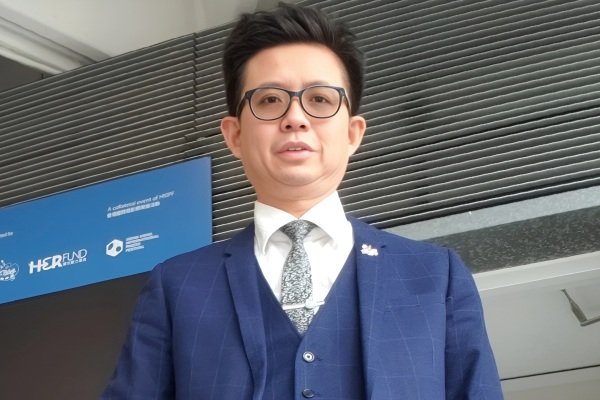
Jason Chu Ka Tak
1. Congratulations on winning in the London Photography Awards! Can you share a little about yourself, what inspired you to pursue photography, and how has your journey evolved since your first shot?
Thank you! It is a great honour to win this award. I am a street and conceptual photographer who loves capturing interesting moments in daily life. When I first started photography, I only focused on taking clear and perfect pictures. Over time, my style changed. Now, I focus more on the relationship between time and people, and I use my camera to tell deeper stories behind ordinary scenes.
2. Can you share the story or inspiration behind your award-winning piece? How does winning this award make you feel about your journey in photography?
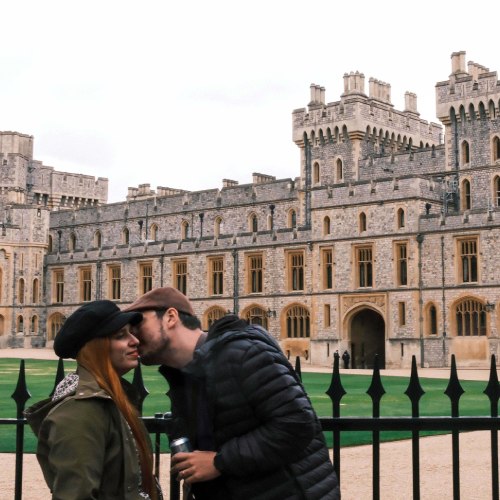
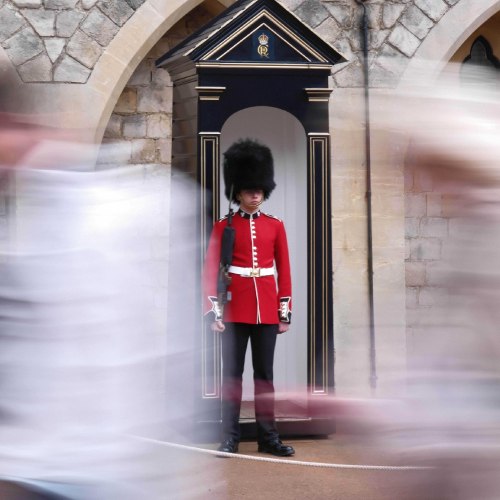
Captured in April 2026, this photo series explores the contrast between historic Windsor Castle and modern human life. While the castle symbolises timeless history, these photos focus on the 'human pulse' that brings ancient stone walls to life. The narrative unfolds through striking daily moments under a soft English sky.
I captured a man with a baby stroller against the grand castle walls, a staff member in a 'CR' hat smiling near modern scaffolding, and a contemporary airplane flying over St. George’s Chapel. Using a 'frame-in-frame' technique through iron railings, I guide the viewer to the emotional core: a couple sharing a quiet kiss near the Quadrangle, right next to a motionless King's Guard frozen amidst a blur of moving tourists.
Winning this award means a lot to me. It validates my creative vision and proves that finding unique stories in everyday life can deeply connect with people worldwide.
3. How do you decide which photo to submit for a competition?
When choosing photos for a competition, my main focus is uniqueness. A great competition piece must stand out immediately and offer a fresh perspective that the judges have not seen before. I look for images with an unconventional angle, a rare moment, or a distinct visual contrast. To me, a winning photo must break the mould and leave a lasting impression through its original look and feel.
4. What first made you pick up a camera?
My photography journey started in childhood when my father gave me a film camera. Back then, I fell in love with capturing the towering skyscrapers of Hong Kong. Later in university, while organising student association events, I frequently used my camera to document the activities and the genuine joy of my classmates. These early experiences taught me how to appreciate both grand structures and authentic human emotions, which still heavily influence my photography style today.
5. What’s your favorite type of photography, and why do you love it?
My favourite type is street and documentary photography, especially when it mixes historic architecture with human life. I love it because it captures real emotions inside a grand setting. To me, old buildings and streets are beautiful, but they truly come alive only when people interact with them. Capturing these quick, natural moments of everyday life is what makes photography so exciting for me.
6. What’s your go-to camera setup, and why does it work best for your projects? What’s your favorite feature?
One of my go-to setups is the Fujifilm X-T50 with the 16-50mm lens. This gear works best for me because it is very lightweight and compact, making it perfect for long days of street shooting. The flexible zoom range lets me capture wide historic buildings and close-up human emotions instantly.
My favourite feature is Fujifilm's Film Simulation modes, especially 'Classic Negative'. It gives my photos a unique, nostalgic look straight out of the camera, perfectly matching the historic and emotional mood of my projects.
7. If someone looked at your work, what’s the one thing you’d want them to feel?
I want them to feel the 'human pulse' and connection within the flow of time. Daily life moves so fast, and old structures like Windsor Castle seem unchanging. But through my work, I hope people can slow down, feel the warmth of genuine human emotions, and realise that even the most ordinary moments are filled with unique, beautiful stories.
8. What was the most challenging part of capturing your winning shot?
The most challenging part was patience and perfect timing. In street photography, you cannot control the environment. To capture the strong contrast in Stillness in Time, I had to wait for the exact moment when the crowd blurred beautifully while the guard stayed perfectly still.
For Love at Windsor Castle, it was about being alert to catch that brief, emotional kiss instantly. Balancing technical settings like a slow shutter while holding the camera steady in a busy crowd required total focus.
9. Is there a specific place or subject that inspires you the most?
I am most inspired by places where historic architecture and modern human life meet. Historic sites like Windsor Castle or the busy streets of Hong Kong are my favourite backdrops. As for the subject, I am always drawn to the 'human pulse'—the real, natural emotions of everyday people. Capturing a quiet, personal moment inside a grand, historic setting gives my work its deepest meaning.
10. Who or what has been your biggest influence in photography?
My biggest influences are my father and everyday life itself. My father gave me my first film camera in childhood, which opened my eyes to photography and architecture. Later, observing the real, spontaneous emotions of people around me became my main inspiration. For me, the changing world and genuine human connections are what keep me passionate and constantly influence how I look through the lens.
11. What message would you share to inspire photographers to participate in photography awards, and what advice would you give to help them excel in the competition?
Trust your unique vision and just go for it. Awards are a great way to challenge yourself. To excel, focus on uniqueness. Do not copy trends. Look for unexpected moments and tell a story only you can tell. Authentic emotion will naturally stand out.
12. What’s one piece of advice for someone just starting in photography?
My best advice is to train your eyes before upgrading your gear. You do not need the most expensive camera to tell a great story. Carry your camera every day, observe the light, and look closely at the people and buildings around you. Focus on finding unique perspectives in ordinary places, because a great photograph comes from your vision, not just your equipment.
13. What role do editing and post-processing play in your creative workflow?
For me, post-processing plays a very minimal and supportive role. Because I use Fujifilm's 'Classic Negative' film simulation, most of the colour and mood are already captured straight out of the camera. I only use editing to do light adjustments, like cropping or fixing exposure. I believe the true story and emotion must be captured in the camera at that exact moment, not created later on a computer.
14. How do you see technology, like AI, influencing the future of photography and your own approach?
I see AI as a helpful tool to speed up post-processing, but it can never replace the human touch. AI can create perfect images, but it cannot experience real life or feel genuine emotions. My photography relies on patience and capturing real moments in the physical world. Technology changes, but the value of authentic human connection remains irreplaceable.
15. If you could photograph anything or anyone in the world, what would it be?
I would love to officially photograph members of the Royal Family in an informal, candid setting. The Royal Family represents centuries of living history and tradition. My dream is to capture their candid, everyday human moments behind the official titles. It would be the ultimate continuation of my passion: showing the real 'human pulse' inside a grand, historic world.