Krzysztof Muskalski
1. Congratulations on winning in the London Photography Awards! Can you share a little about yourself, what inspired you to pursue photography, and how has your journey evolved since your first shot?
Thank you very much for the congratulations — winning the London Photography Awards is both an honour and a great joy for me, but also a significant challenge and an incentive to continue developing artistically.
My inspiration to take up photography has undoubtedly been curiosity about the world, people, and the reality around me. That curiosity had already been developing in my childhood, more than 50–60 years ago. At that time, my financial means were limited, both in terms of obtaining satisfying photographic equipment and in exploring the world.
During those years, my imagination and my understanding of the world were shaped largely by books. Over time, geopolitical changes in my part of Europe, together with my professional development, made it possible for me to own good equipment and to travel and discover the world.
Throughout all these years, photography has given me immense joy through the opportunity to share my curiosity about the world. I present my photographs at many solo exhibitions, author meetings, and online. I also submit them to numerous photography competitions, where I can receive feedback on my work and further shape both my technique and my artistic sensitivity.
2. Can you share the story or inspiration behind your award-winning piece? How does winning this award make you feel about your journey in photography?
In the competition, I presented 10 photographs in 10 different categories. Of course, each of them has its own story, and I will share the stories of three of them.
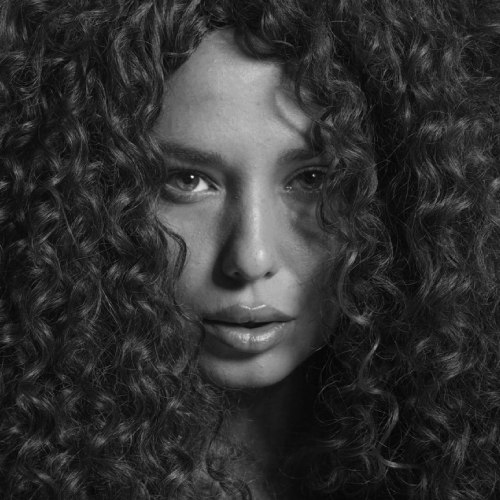
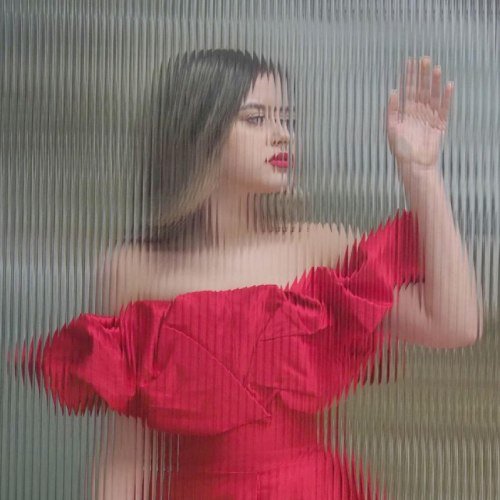
The photograph “Hair” was created in the studio during a session with model Phoebe Kamracka. It was a sensual/nude shoot. We spent several hours working on different poses and lighting setups. At the end of the session, I felt that one more sensual portrait was still missing.
After a few attempts, I decided to use a wig of thick, curly hair and a lighting arrangement that would help me find sensuality in the model’s eyes. Despite our fatigue at the end of the session, we managed to create a portrait that was ultimately awarded the Platinum Winner title.
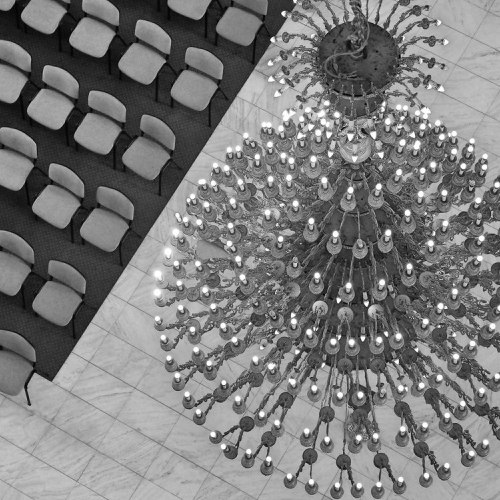
The photograph “Chandelier” was taken during PhotoCamp 2025 in Transylvania, Romania. At the end of the camp, we were invited to visit the impressive Good Friday Church in Zalău. Besides its beautiful frescoes, the most striking feature of the church is undoubtedly the impressive chandelier hanging above the main part of the sanctuary. I spent quite some time thinking about how to capture its extraordinary character. The opportunity for a unique perspective came when we climbed up to the dome crowning the church. From there, I was drawn to the contrast between the geometry of the chairs and the blossoming crystal structure of the chandelier.
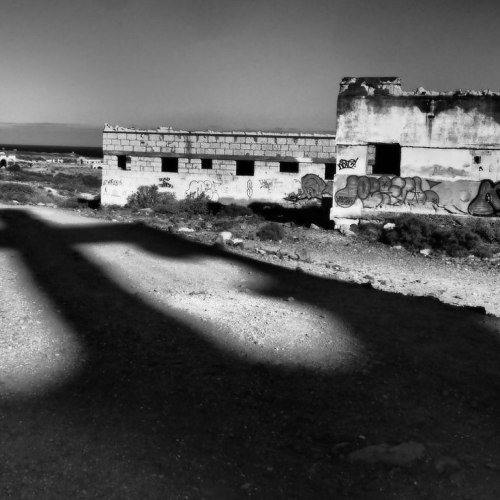
The photograph “The Way of Cross” was taken in an abandoned leprosarium in Tenerife. I visited the place shortly before sunset. At the end of the road leading through the deserted, ruined buildings stood the remains of a church structure. Above it rose a huge cross, whose shadow dominated the path running through the leprosarium. It created a remarkable symbolism of the Way of the Cross — not only as a religious event, but as a path of human suffering, exclusion, and spiritual trial experienced by people afflicted by leprosy.
Winning in different categories confirms for me that it is worth seeking inspiration in diverse themes, broadening one’s horizons, and looking for new challenges.
3. How do you decide which photo to submit for a competition?
It is usually a great challenge. It is a certain compromise between a subjective and an objective choice. Sometimes technical and craft-related qualities are more important; at other times, subjective sensitivity tied to the atmosphere and emotions surrounding the creation of the photograph becomes decisive.
4. What first made you pick up a camera?
Undoubtedly, it was my fascination with the world and the desire to share the way I discover it. I am happy when I can convey my emotions, my artistic sensitivity, and arouse the same curiosity in those who view my photographs.
5. What’s your favorite type of photography, and why do you love it?
My favourite type of photography is travel photography — both in the literal and the metaphorical sense. My journey in photography is a journey through life. Along the way, I encounter places and people, history, the present, and the future; I encounter emotions and new horizons. In this way, I build my knowledge, imagination, and sensitivity.
6. What’s your go-to camera setup, and why does it work best for your projects? What’s your favorite feature?
My current favourite camera setup is the Olympus OM-D series, along with a wide range of lenses that give me the flexibility to work in many different areas of photography. I also enjoy using the camera’s creative modes and experimenting with long exposures.
7. If someone looked at your work, what’s the one thing you’d want them to feel?
I would like my work to open new paths of imagination for him and inspire him to take on new challenges, whether in exploring the world or in creating photographs.
8. What was the most challenging part of capturing your winning shot?
When I take a photograph, I do not think in terms of whether it has the potential to win a competition. It is usually a momentary impulse, a sudden inspiration, a fascination with the instant. Only later, when selecting images for a competition, do I try to analyse their qualities and their competitive potential.
9. Is there a specific place or subject that inspires you the most?
I like being surprised by the world around me — what inspires me is novelty. It may be new places I visit, or places I saw long ago that have changed over time. I also enjoy meeting models I do not know, because I can discover them and build a shared narrative with them.
10. Who or what has been your biggest influence in photography?
The diversity of the world and of people. Their impact on my imagination.
11. What message would you share to inspire photographers to participate in photography awards, and what advice would you give to help them excel in the competition?
Participating in photography competitions is highly motivating for artistic growth, for gaining technical experience, and for developing one’s own artistic sensitivity. One should not be discouraged by initial setbacks, but instead gradually build artistic potential.
12. What’s one piece of advice for someone just starting in photography?
Above all, I would encourage them to believe in themselves, to open up, and to share their emotions and sensitivity. They should not let themselves be shaped too strongly by the mass influence of social media — neither in terms of subject matter, photographic technique, nor the equipment they feel they must use. As the saying goes, the best camera is the one you have with you.
It is worth studying the photographs of the masters, especially the older ones, and listening to their words. My favourite master is Ansel Adams, whom I value not only for his photographs but also for his insights. One of his statements became the motto of my artistic path: We don't make a photograph just with a camera; we bring to the act of photography all the books we have read, the movies we have seen, the music we have heard, the people we have loved.
13. What role do editing and post-processing play in your creative workflow?
I try to ensure that it does not play a dominant role. I want the creative process to begin before the photograph is taken — what Ansel Adams described as previsualisation. In editing and post-production, I usually rely on basic adjustment tools.
14. How do you see technology, like AI, influencing the future of photography and your own approach?
I believe artificial intelligence will have a major, even dominant, influence on photography. In my view, AI should have a separate category in photography competitions. I can see AI as a useful tool for seeking inspiration, but I would not want to use it to alter photographs I have taken myself.
15. If you could photograph anything or anyone in the world, what would it be?
Something that surprises me!