Petra Trivilino
1. Congratulations on winning in the London Photography Awards! Can you share a little about yourself, what inspired you to pursue photography, and how has your journey evolved since your first shot?
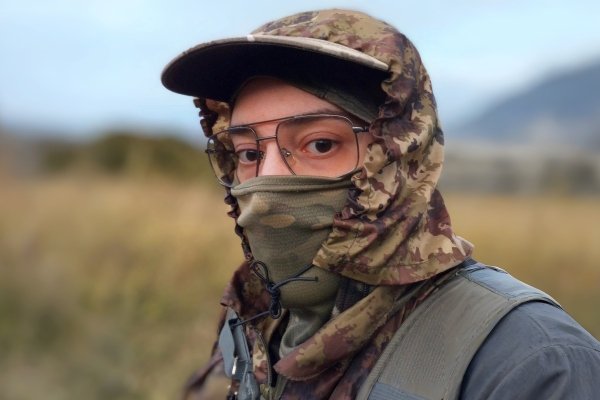
I'm Petra Trivilino, an Italian freelance animal photographer. I live in Abruzzo, a beautiful region in central Italy, rich in nature reserves and exceptional national parks, renowned for its extraordinary biodiversity.
I studied art and earned a degree in Media Education. After completing a Master's degree in Advertising Graphics and Web Design, I earned a second degree in Pedagogical Sciences.
As a photographer, my work involves photographing animals, both domestic and wild, in 360°, with a respectful and ethical approach. Since 2018, I've been actively conducting photoshoots in some familiar mountain areas. The decision to embark on this path came about by chance, after a series of events related to my studies and the search for stable work.
My family has always had a passion for photography, as my sisters have degrees in photography and my father has always taken photographs. So, thanks also to my graphic design studies, I was already immersed in this wonderful art. Since I was young, I've dabbled in amateur photography, never seriously considering a career in this field.
In 2017, my family gave me my first SLR, and my mother, given my great passion for animals and nature in general, suggested I try my hand at animal photography. From there, after a year, in 2018, I decided to begin my journey as a self-taught photographer, and I've come this far!
Looking back at my first shots, I'd say that, over these eight years of activity, the stylistic evolution I've undergone has been significant: I've often had to challenge myself, making many sacrifices of various kinds, always thanks to the great support of my family, whom I thank infinitely!
The shots I offer now are certainly more incisive, more self-aware, and consolidated in the style I wanted to create to stand out and be recognisable.
As I've said, my approach is grounded in ethics and respect for nature and the subjects I photograph: I don't chase the shot at all costs, but rather seek authentic, unfiltered emotions. For me, this is the only possible approach to a wild and fascinating world that we humans should learn to truly respect.
2. Can you share the story or inspiration behind your award-winning piece? How does winning this award make you feel about your journey in photography?
This year, five gold medals arrived, and the emotion was immense!
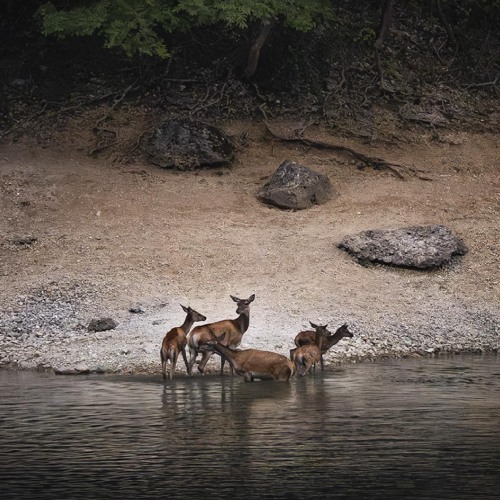
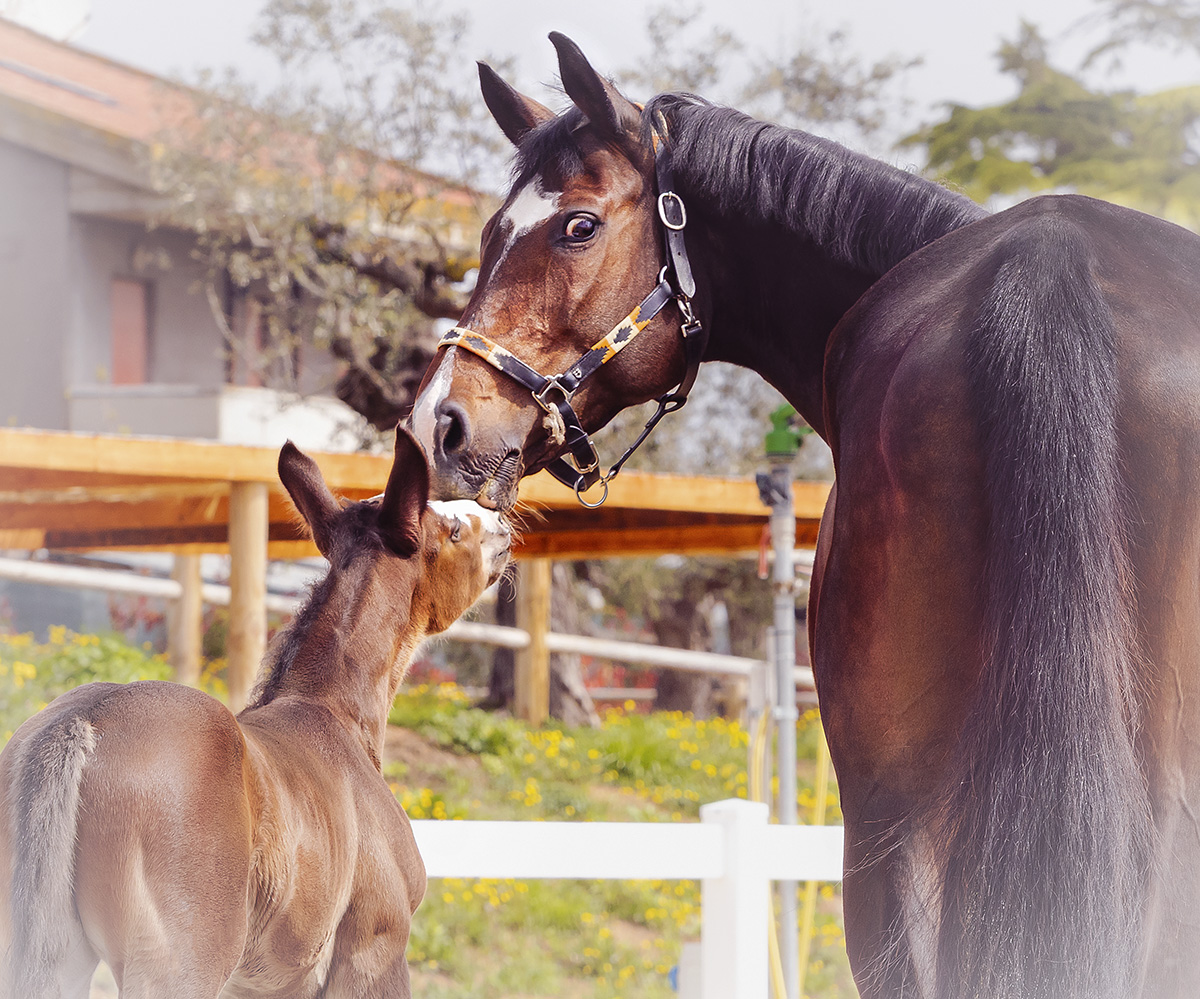
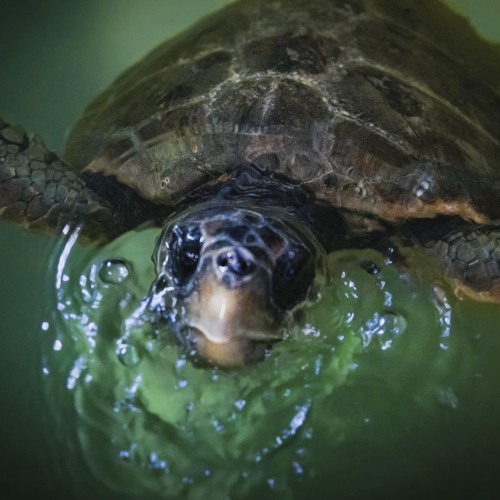
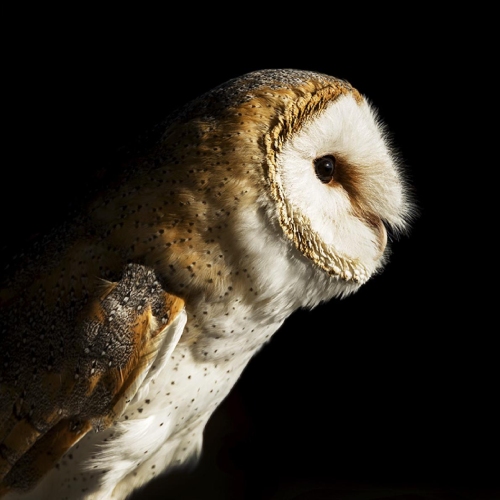
Each of the award-winning photos represents a moment of great emotion and harmonious collaboration with special people, including the owners of Palù, the beautiful Australian Shepherd featured in the award-winning shot "Under the Waterfall," not to mention the various companies in the sector, such as the "Luigi Cagnolaro" Marine Turtle Recovery and Rehabilitation Center in Pescara (Abruzzo), the "Rio Tavo Horse Club SSD" riding school in Città Sant'Angelo (Abruzzo), and the "I Falchi di Rocca Romana" Birds of Prey Flight Center in Trevignano Romano (Lazio), who kindly opened the doors of their workplaces to me, making these wonderful results possible.
To all these people, allow me to extend my most sincere thanks!
This victory, besides being a fantastic achievement that makes me proud of all the sacrifices I've made with my family, is a fundamental step that, I hope, will further strengthen my professional image in the eyes of the public, increasing the importance and credibility of my work. For all of this, I can only thank God for allowing me to get this far!
3. How do you decide which photo to submit for a competition?
Essentially, you should choose shots that are likely to pique public interest, not just those the photographer in question likes.
You have to be smart and consider the type of contest, the country sponsoring it, and the categories it includes. I certainly have my favourites, but that's no guarantee, and I have to try to put myself in the shoes of anyone viewing my photos to choose the most suitable ones to submit, as some works may be inappropriate or unsuitable for that specific contest.
Aside from that, a little intuition never hurts!
4. What first made you pick up a camera?
Curiosity was my driving force! I believe curiosity is the main foundation for a photographer, whether amateur or professional. I remember seeing my first camera at six years old: it was a yellow analogue compact belonging to one of my sisters, and I only used it for playing!
Then, at thirteen, I was given another one, and I started taking photos, taking it with me on school trips. Photography was fun and allowed me to share what I saw with my loved ones, especially since it was the '90s and we had no way to communicate until the photos were developed.
That's how I started, having fun, and I still have fun because, when I take photos, I finally enter my own world, so much so that curiosity always pushes me to look at what surrounds me with eyes full of wonder!
5. What’s your favorite type of photography, and why do you love it?
Animal photography is my job and my favourite genre, because it gives you the opportunity to see incredible things that not everyone gets to see! That's why I think those who work in animal or nature photography are very privileged. Personally, I love this genre of photography because it makes me feel good and connects me with sensations only possible in the calm and silence of the natural environment.
6. What’s your go-to camera setup, and why does it work best for your projects? What’s your favorite feature?
I always shoot in manual mode, and it's also my favourite feature! Thanks to this mode, I have everything under control. However, I don't have a favourite setting, because it depends on what I'm doing and many other factors, such as time, light intensity, sudden weather changes, and knowing where to find a particular species.
Above all, I like nothing to be unexpected: I photograph in places where animals don't always come from the same place or at the same time. So, I reflect and decide once I get there which settings will be best for the situation. There are definitely some always-on features, such as continuous shooting, automatic ISO, and, for photo style, Fine Detail mode.
7. If someone looked at your work, what’s the one thing you’d want them to feel?
I want to convey to the viewer the same emotion I feel the moment I press the shutter button! I'd like the viewer to experience the same sensations of well-being, euphoria, and wonder, just as if they were there with me in that moment.
8. What was the most challenging part of capturing your winning shot?
It's always quite challenging, because in nature, nothing is ever the same, and you have to rely on your own strengths and your knowledge of the territory to achieve the desired result!
It's a profession that requires constant study, information, and updating, because no wild animal will pose for you: you are the one who must become skilled at recognising the right moment to take the shot!
I've learned that this skill is acquired only after a lot of time and experience, and just two years isn't enough.
By practising nature photography ethically, I always put the animal's well-being and respect for its habitat first: this also means being willing to return home empty-handed and wait for the right moment to arrive spontaneously.
It takes patience, but I assure you, you'll never be disappointed!
9. Is there a specific place or subject that inspires you the most?
In the Italian region where I live, Abruzzo, there're fantastic, beautiful, and biodiverse places, each unique.
In particular, I'm very fond of the plains and wild forests that lie about 800 meters above sea level, places I've known for years, where I often go for my photographic stakeouts in nature and where I've seen so many wonderful things.
In this regard, I'd like to focus on two themes that have been particularly close to my heart since the beginning of my career: the ethical question of nature photography and the issue of personal safety.
Regarding the first theme, I've based my entire photographic journey on ethics. From an early age, in addition to growing up in contact with different types of animals, my parents taught me to respect all creatures and their habitats, both wild and domestic.
Thanks to the veterinary studies undertaken by some of my family members, I was able to acquire technical skills and explore dog training as a form of learning, based on friendship and daily coexistence with one's dog.
Once I embarked on my journey, these and similar experiences, always related to the animal world, helped me better understand how to approach nature photography ethically. That is, prioritising not just the shot at all costs, but respect for the daily lives of the individuals photographed and their survival needs.
In nature photography, ethics becomes essential to achieving something authentic and spontaneous, a shot that brings out the purest side of the subject.
The ethical behaviour of a professional photographer is acquired through study of the territory, silence, and many hours of observation without, I emphasise, the use of bait or calls of any kind. First, because their use can be dangerous for wildlife, creating various problems even in their habitat, and second, because these stratagems not only cause damage, but also hinder the skill of those who practice them.
In my personal experience, if you know how to respect it, Nature will always reward you with authentic emotions! The second aspect I consider extremely important is personal safety!
I've noticed how some aspiring photographers are much more focused on choosing the right gear in their backpack than on their own safety. I'd like to add how important it is to carry a survival kit and a first aid kit, in addition to your photography equipment, preferably along with suitable footwear and clothing, because in this profession, safety comes first.
Using equipment correctly, not just photography, can prevent many problems that often don't even affect wild animals, but other types of unexpected events, such as accidental falls, holes in the ground, ticks or other parasites, harmful insects, mineral deficiencies, sudden changes in weather, inadequate footwear and clothing, and so on—little things that may seem trivial but are not at all in a wild and solitary environment.
Dear reader or inexperienced photographer, before setting out on a photography excursion, think about your safety first: carefully pack your backpack with the right equipment and remember not to venture into unknown places without the help of an expert guide. Only after doing this can you prepare your favourite photographic equipment!
10. Who or what has been your biggest influence in photography?
I believe nothing had a greater impact on me than the constructive criticism I received from an industry expert right at the beginning of my self-taught journey! At the time, I was posting shots on social media and didn't realise I didn't yet have a recognisable style.
In 2018, through the Canon Club Italia, I participated in the UCOP 2018 exhibition in Roseto degli Abruzzi, a beautiful coastal town in the province of Teramo, Abruzzo. On that occasion, I received this important, critical and photographic evaluation from a representative of a renowned photography publishing house.
It was a crucial encounter for me, the first real professional exchange for which, today, I can only be grateful, because it helped me solidify my personal style and gain a comprehensive vision of what my professional career could be. If I could personally thank that illustrious expert, I certainly would!
11. What message would you share to inspire photographers to participate in photography awards, and what advice would you give to help them excel in the competition?
I believe that participating in competitions and comparing yourself with more experienced people is incredibly helpful for broadening your horizons, growing, and understanding where you're going wrong!
Participating and receiving an award becomes a certificate of merit that significantly impacts the public's perception of you, and this is important for your career. I strongly recommend participating, but with complete peace of mind, without anxiety, and with the desire to build a solid and reliable professional foundation by learning from your mistakes.
I also recommend not focusing exclusively on winning first prize, because even an honourable mention should be considered an achievement to be celebrated: in these cases, nothing should be taken for granted, and every positive result should be welcomed with joy!
12. What’s one piece of advice for someone just starting in photography?
I believe photography is a healthy habit if practised with positivity and consistency.
I would advise anyone, regardless of their photographic style, to be curious, to study, to look at everything with enthusiasm, and to start with what they have available rather than with overly expensive equipment. I would also recommend being self-critical and always open to accepting external feedback, as long as it's constructive.
For those who want to try their hand at animal or wildlife photography, I would advise gradually acquiring the right equipment, as it is an expensive profession, and to begin by photographing in your own garden or in the countryside, being careful not to break any laws or restrictions.
I would recommend researching the locations, species, and regulations in force, and seeking help from experts, tour guides, or other photographers, at least initially, before finding yourself alone in a particular location. Paying close attention to your safety will help you build a broad and diverse knowledge base on many related topics.
Last but not least, I would suggest pursuing this profession ethically, respecting everything around us and that interests us, waiting in silence for the right moment to take the shot, and enjoying every breath, scent, and sound of nature because, ultimately, those who approach this photographic style do so above all to be at peace with themselves and with the surrounding environment.
13. What role do editing and post-processing play in your creative workflow?
I don't like to deceive the viewer, so I never edit the background or subject of a photo beforehand. Furthermore, I try to take a beautiful photo first and then add the finishing touches in post-production, because the viewer needs to know that my photos are all authentic.
Returning to your question, I consider post-production essential for giving shots a personal and recognisable style, as well as for adding logos or signatures. But, above all, I believe that technology, even the most useful, should be used honestly and transparently in every circumstance.
14. How do you see technology, like AI, influencing the future of photography and your own approach?
As I've said before, I believe technology should be based on honesty towards the viewer. Every tool, if used wisely, can have its advantages, but using tools like artificial intelligence without even knowing how to use a camera is frankly useless, because even AI can make mistakes, and not being able to recognise them certainly impacts the final product.
I believe that no one can ever replace manual skill or the human brain, much less the "touch" on the cameras, whether vintage or modern. And if you can achieve good results with little equipment, you will certainly achieve better results with any more advanced tool! I'm convinced that experience, sooner or later, pays off more than any algorithm or simplified tool.
15. If you could photograph anything or anyone in the world, what would it be?
I would definitely choose to photograph the Bengal tiger, my favourite animal, in its natural habitat: it would be a dream come true! For now, it remains a distant goal. Let's give it time!