Tea Chen
1. Congratulations on winning in the London Photography Awards! Can you share a little about yourself, what inspired you to pursue photography, and how has your journey evolved since your first shot?
My journey in photography began with photographing the people around me. At first, it was very simple—I just wanted to record my family, friends, classmates, and the moments that appeared in everyday life. Later, through my study and practice of Buddhism, I gradually came to realise that photography is not only about pressing the shutter but also about learning how to observe the world and reflect on one’s own heart.
Over time, my relationship with photography has changed. In the beginning, I cared more about whether a photo looked beautiful or whether my equipment was good enough. Now, I care more about whether I have truly seen the person in front of me, the light of that moment, and the quiet details that are often overlooked. Photography has taught me to slow down, to observe more deeply, and to cherish the precious moments that pass so quickly in daily life.
2. Can you share the story or inspiration behind your award-winning piece? How does winning this award make you feel about your journey in photography?
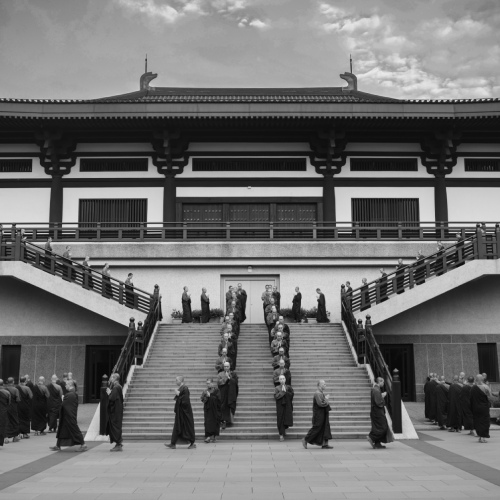
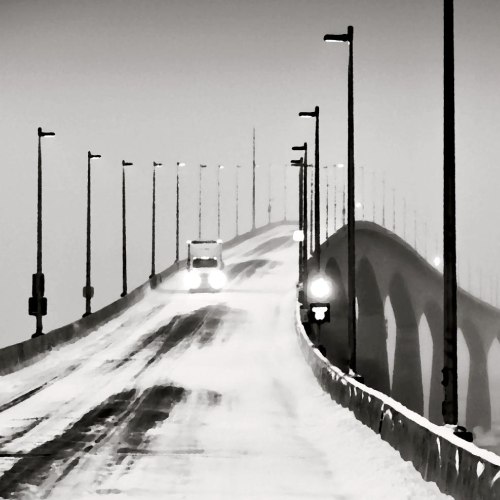
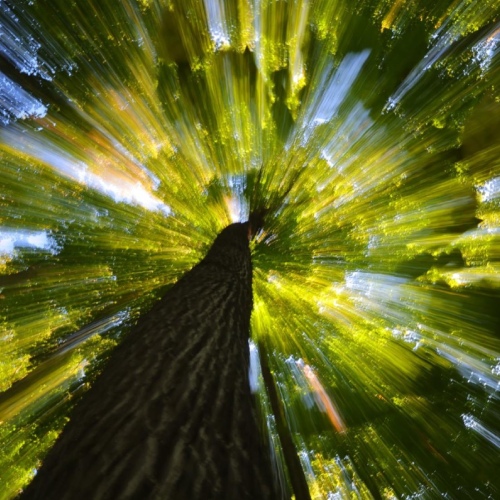
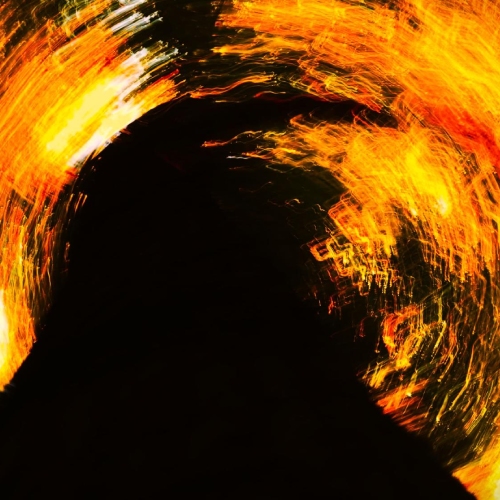
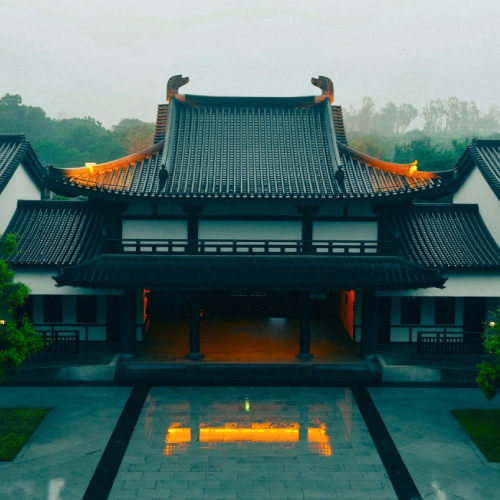
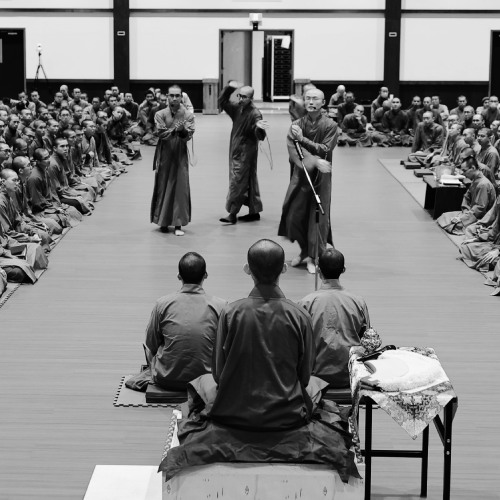
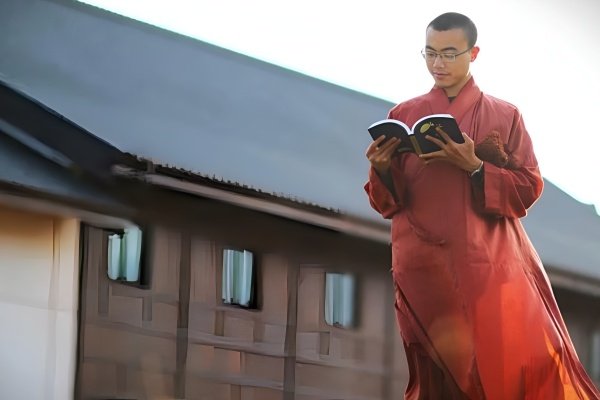
The inspiration behind this work came from my daily participation in monastery activities and from spending time in nature. Monastery life has a very quiet and steady power, while nature allows me to feel the flow, vastness, and vitality of life itself. These experiences made me want to use photography to record the stillness, clarity, and emotion I felt within.
Receiving this award is both an encouragement and a reminder. It encourages me because it shows that the observations and efforts I have quietly accumulated may be able to connect with more people through my work. At the same time, it reminds me not to stop at the joy of receiving recognition, but to continue learning, observing, and allowing photography to become a path that leads me more deeply into life and into my own heart.
3. How do you decide which photo to submit for a competition?
I take tens of thousands of photographs every year, so selecting an image is an important and honest process for me. I do not only look for a photograph that is technically perfect. Instead, I return to the feeling I had when I made the image: Which photograph stayed in my mind after I took it? Which image can still bring me back to the atmosphere of that moment when I look at it again later?
When choosing a work for a competition, I usually select the image that left the deepest impression on me and best represents the feeling of that moment. To me, the most important thing is not whether a photograph is visually striking at first glance, but whether it carries a lingering power that can remain beyond the moment of capture.
4. What first made you pick up a camera?
My first interest in photography was deeply connected to my father. When I was a child, I saw him picking up a camera to record my childhood. I thought it was very cool, and it was probably the first time I felt the power of a camera: it could preserve a moment that would otherwise disappear.
Later, I began photographing other people. When I saw how happy or moved they were when looking back at the photographs afterwards, I came to understand photography more deeply. A photograph is not just an image—it is also a memory, a form of companionship, and sometimes even a bridge that reconnects people with their past and with one another.
5. What’s your favorite type of photography, and why do you love it?
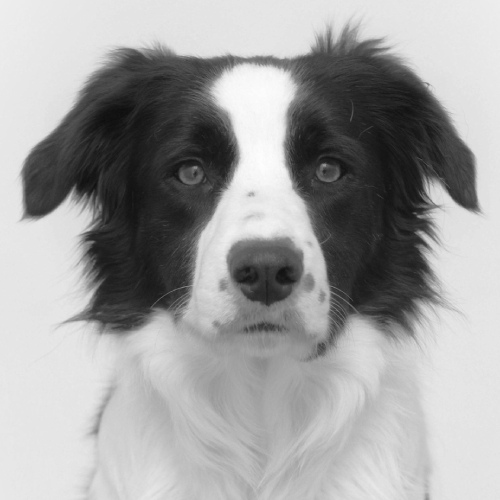
I enjoy portrait photography, black-and-white photography, nature photography, and artistic photography. These genres are all closely connected to life, and they help open my eyes to beauty.
Portrait photography allows me to see the unique expressions and life stories of each person. Black-and-white photography helps me focus more purely on light, shadow, lines, and emotion. Nature photography reminds me that the world is constantly revealing beauty in a very quiet way. Artistic photography gives me the freedom to transform inner feelings into visual form. Although these genres are different, they all help me observe life with greater sensitivity and cherish the people, places, and moments around me.
6. What’s your go-to camera setup, and why does it work best for your projects? What’s your favorite feature?
I mainly use Canon full-frame mirrorless cameras, and my current camera is the Canon EOS R5 Mark II. Its image quality, autofocus, colour rendering, and overall handling suit my needs very well, especially for portraits, nature, and documentary-style daily-life photography.
I also enjoy pairing it with several of Canon’s more affordable and lightweight prime lenses. These lenses allow me to stay flexible while shooting and not be limited by heavy equipment. I also use NiSi filters to control light and atmosphere in my images.
One of the things I appreciate most about Canon is its skin tone rendering. It presents portraits in a natural, gentle, and authentic way, which is very important to me. When I photograph people, I do not want them to look overly modified or artificial. I want them to appear closer to who they truly are, while still carrying warmth and vitality within the image.
7. If someone looked at your work, what’s the one thing you’d want them to feel?
I hope viewers can feel a sense of quiet beauty, as well as the beauty that is often overlooked around us. Beauty is not always far away. It may exist in a person’s eyes, in a beam of light, in the texture of a leaf, or in the silent atmosphere of a monastery or forest.
If my work can help someone slow down for a moment and rediscover the beauty that already exists in daily life, I would feel very grateful. To me, photography does not always need to create a strong shock. Sometimes a quiet and lasting touch is closer to what I wish to express.
8. What was the most challenging part of capturing your winning shot?
The most challenging part was how to faithfully record what I saw with my eyes and what I felt in my heart. Often, what we see and what we feel in a moment are not easy to translate completely into a photograph.
The difficulty of photography is not only about exposure, composition, or focus. It is also about how to allow an image to carry the atmosphere and feeling of that moment. I have to make decisions quickly about light, expression, background, and emotion, while also keeping my own mind focused and calm. For me, this is both the most difficult and the most fascinating part of photography.
9. Is there a specific place or subject that inspires you the most?
Monasteries and forests are the places that inspire me most. A monastery gives me a sense of stability, solemnity, and inner stillness, while a forest allows me to experience the vitality and quiet order of nature.
In a monastery, I am often moved by daily practice, activities, light, shadows, and people’s expressions. In a forest, I am drawn to trees, animals, air, and the constant changes of light. Although these two places seem different, both of them help me return to a simpler and clearer way of seeing.
10. Who or what has been your biggest influence in photography?
The two people who have influenced me the most are my father and my Buddhist Teacher Zhen-Ru.
My father was the first person who helped me see the beauty of photography. He used his camera to record my childhood, and through that, I came to understand that photographs can carry time and emotion. This influence made me feel close to photography from a young age.
My Buddhist Teacher Zhen-Ru has influenced me on a deeper level. She has taught me to look at the world with a softer, more delicate, and more grateful heart. This has also changed the way I photograph. I am no longer just searching for beautiful scenes; I am learning to see what is precious within the ordinary and to discover beauty that is worth recording in everyday life.
11. What message would you share to inspire photographers to participate in photography awards, and what advice would you give to help them excel in the competition?
I would encourage photographers to participate in competitions with courage. Entering a competition is not only about winning an award; it is also a process of improving oneself and reviewing one’s work from a new perspective. When our work is placed on a larger platform, we can gain a more objective view of our strengths and weaknesses.
My advice is not to choose an image only because you like it at first glance. Instead, examine whether the work has a clear theme, emotion, and complete visual expression.
A strong competition image is not necessarily just technically perfect. It should also have a memorable quality, a sense of authenticity, and a unique way of seeing that allows the judges to feel the photographer’s personal voice.
12. What’s one piece of advice for someone just starting in photography?
My advice is: do not rush, and keep practising. Photography takes time, observation, and repeated experience. When people first begin learning photography, it is easy to focus too much on equipment. But equipment is only a tool; it is not the whole of photography.
Instead of immediately pursuing expensive gear, it is better to first ask yourself what you truly want to photograph, why you want to photograph it, and what you hope to express through your images. The more clearly you understand your own needs, the better you will be able to choose the equipment and methods that truly suit you. In the end, what matters most in photography is still your eyes, your heart, and your patience to keep practising.
13. What role do editing and post-processing play in your creative workflow?
For me, post-processing is a tool that helps a photograph come closer to the feeling I had when I captured it. I do not want editing to change the essence of an image. Rather, I want it to help reveal the beauty that was already there more clearly.
It is like helping someone who is already beautiful look even better. Editing can adjust light, colour, contrast, and details, making the image cleaner and more complete. But it should not replace the photograph itself. To me, good post-processing should feel natural and restrained. It should help viewers enter the image more easily, rather than make them notice the editing first.
14. How do you see technology, like AI, influencing the future of photography and your own approach?
I believe artificial intelligence will become an important tool in photography. It can help us organise images, improve efficiency, assist in post-processing, and even offer new possibilities for creative expression.
However, I also believe we should use AI as a tool rather than be controlled by it. The most precious part of photography is still the way a human being sees, feels, and chooses. AI can help with technical tasks, but it cannot replace a photographer’s real-life experience and personal way of seeing the world. For me, I will continue to treat AI as a tool while trying to preserve my own perspective and sincerity in photography.
15. If you could photograph anything or anyone in the world, what would it be?
If I could photograph anything or anyone in the world, I would still choose the people and things around me: my teachers, my parents, my classmates, nature, and small animals.
These subjects may not seem the most distant or spectacular, but they are the closest to my life.
Photography has taught me that the beauty most worth recording is not always far away. Very often, it is right beside us. To be able to use my camera to record the people I cherish, the path I am learning from, and the subtle changes of nature and life is, to me, the most meaningful kind of photography.